

Index
Politics
Spain: Historic Elections
The Spanish general elections of November 2026 are unfolding under the paradox of a permanent electoral campaign, marked by the echoes of the previous electoral process and the new rhythms of contemporary politics.
https://conciencia-democratica.org/articulos/espana-elecciones-historicas?lang=enBy Víctor-Xavier Bigorra LorenzoNovember 22, 202645 min read
In-depth reading
Allow me to briefly break the promise I made in my previous article—to review the recent history of Catalan independence—in order to pause on an event of transcendental importance for Spanish political life: the general elections of 29 November. An electoral date that, while now materialising in a campaign that began on 13 November, has been permeating our public life not only since the day of its calling on 5 October, but even since 23 July 2023 itself, the previous election.
It is curious that an event of which we had no knowledge until a month and a half ago has marked Spanish politics for the last three and a half years. But this is not the only anomalous element we are experiencing in this electoral campaign. For the first time, at least in a very noticeable and striking way, we are living through what we might call the new rhythms of fluid current affairs in a Spanish electoral campaign.
Times in which almost any event goes from being an imperative priority to a mere echo of the past, where campaign issues can almost be listed by the day, whereas in other societies or other times these same issues would have lasted throughout the entire campaign. But we are also experiencing a new claim to the historic condition that these elections have for all the actors involved. It is worth analysing these three elements separately because, beyond the data and the numerology of the polls, they are interesting for drawing conclusions about the political moment our societies are living through.
The paradox of the post-electoral electoral campaign
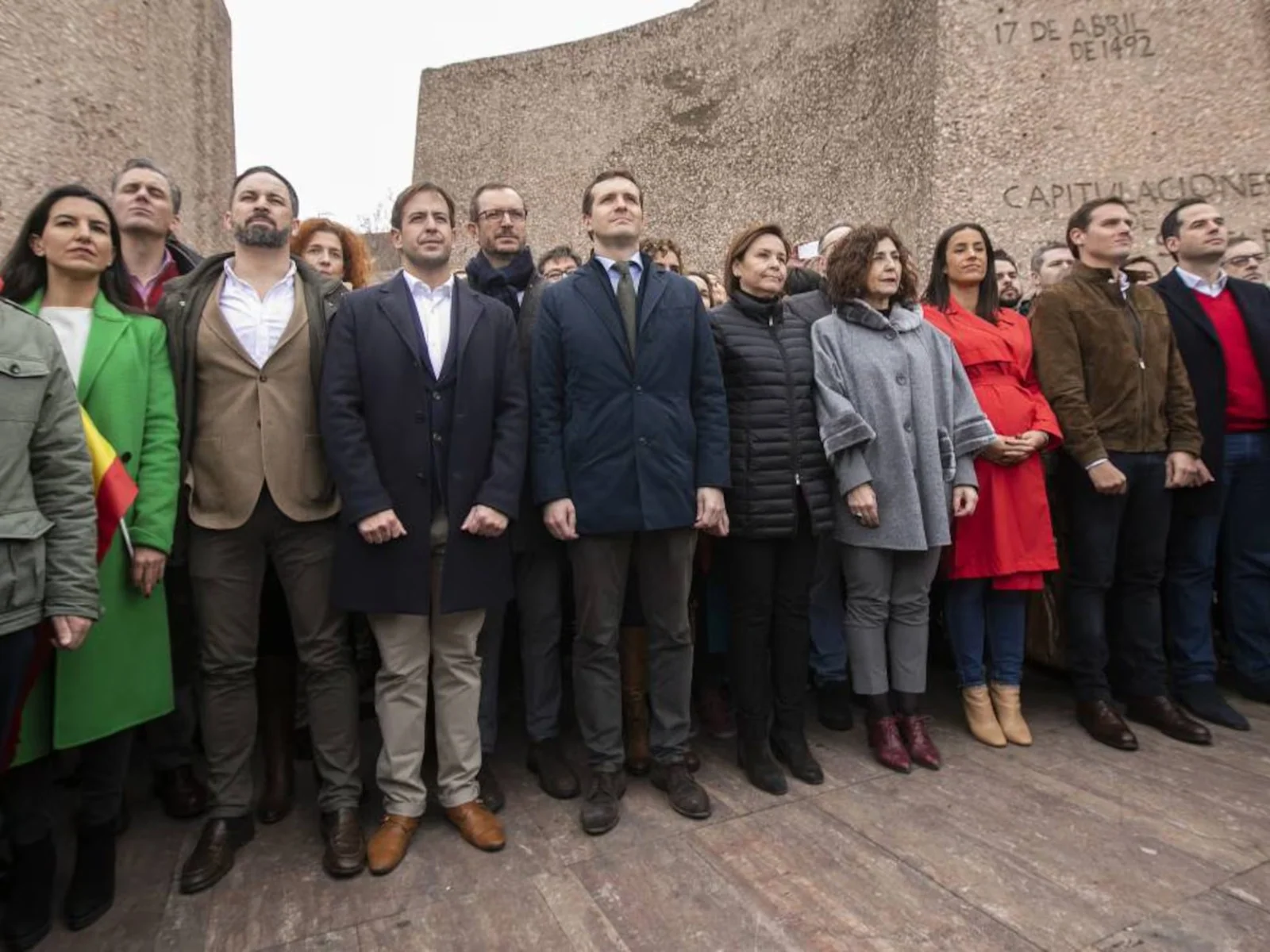 People often speak informally of the concept of the post-electoral hangover, a supposed effect that occurs after election day and the knowledge of its results, consisting of the exacerbation and intensification of the various emotions resulting from the consequences of the electoral results: the winners (or those who see themselves as winners) experience a particular honeymoon, in which joy takes hold of the souls of those who believe they have fulfilled their objectives, leaving the management of the electoral result itself for later; the losers (who almost never see themselves as losers) appear dejected, downcast, waiting for the moment to leave that embarrassing press conference to lick their wounds and hope that the path of reconstruction will be merciful to them; and those in the middle, those who were simply passing through and whose modest expectations provoke modest reactions, adopt either the attitude of inconsequential commentators on other people’s results (often pretending to pass them off as general) or one of authentic and sincere humility.
These effects unfold throughout election night, once the results are known, and once the actors involved have gathered sufficient courage to come out and give a thoughtful and reasoned assessment of the latest data received, and they can last a few days. It is a reasonable effect: causes (electoral results), consequences (reactions to the results). However, the paradox we encounter in these Spanish general elections, and probably in other elections around the planet, has to do with an indefinite prolongation of this hangover in the form of a permanent electoral campaign. In this article we will focus on the particular Spanish case.
In the Spanish case, it could be said that the electoral hangover of 23J has lasted as long as the XV legislature has lasted. The echoes of that night continued to resonate throughout the entire 2023-2026 session, and all political action, analysis and statements since then have always been made with an eye on a date that until the last moment was never clear: that of the next elections. Both from the Spanish right, which has taken as a hobby declaring as illegitimate any result that does not allow it to govern and any option that is not its own, and from socialist fifth-columnism, which does not accept that the only thing it can aspire to is to beg the right to spare its life, an intense campaign began to demand a repeat election almost from the first moment, even before the legislature was inaugurated.
The Spanish right found itself in the situation that the siren songs of the polls of recent years did not materialise into tangible results that would allow them to apply their programme. It is one of the risks one runs when reality and the perception of reality do not correspond. From that point of view, still ignoring the legal and material impossibility of calling early elections during the first year of the legislature, they put all their effort into the political front (in addition to the judicial front) to periodically demand the calling of elections. Leaving aside the legitimate capacity of each person to demand what they consider appropriate, even when what is demanded does not conform to the possibilities of reality, it is curious the constant contempt to which progressive voters are subjected by being deprived of the legitimacy of their political choice.
Constantly demanding an early election meant denying the validity of the electoral results; it was the same as repeatedly affirming that what had been voted for was useless, that it was not what should have come out, and that it had to be done again. It means despising the right of those who do not share your political programme to enjoy the same constitutional rights as you, because a legislature in Spain lasts four years regardless of what majorities there are in that legislature. But even so, despite the constant contempt, the denial of the rights of the adversary, the lack of political proposal and the disconnection from reality, this legislature has been full of constant demands for an early election.
At this point two questions are curious. The first is that this type of grandiloquent declarations and petitions are always made by appealing to an immense majority of the population, sometimes even to the entirety of the population. If, according to the electoral results, it is already complicated to attribute a set of more or less coherent ideas to more modest percentages of the population, such as 20% or 30%, and even to use more humble terminology, such as that of an abstract majority, I find it implausible to think that anyone can attribute a desire as specific as that of an untimely electoral call to massive percentages such as 70%, 80% or even 100% of the population. What position is left for the part of the Spanish population that does not see itself reflected in the affirmation of a desire that the person making it assures is shared by the entire Spanish population? The only logical option is that, simply, the person asserting that does not care, that they do it for pure rhetoric (not even for political strategy anymore) and that they want to make up for an evident lack of discourse with affirmations that have little impact on reality.
The second question is the contradiction between this expressed desire and the materialised reality of that desire. Although it is in this last legislature when this request for an early call for elections has been most intensified, it is no less true that this custom began, in a somewhat more modest way, in the 2019-2023 legislature. It is worth remembering that, once the general elections were called for 23 July 2023, it was categorically assured that the call corresponded to a desire to undermine citizen participation, and that is why they were called in July, the warmest and most summery month (apparently the month of August has been a collective daydream all this time).
This desire, like so many others, did not correspond to reality, when finally participation increased by 4 points compared to the previous elections. Although timidly, the same argument has been attempted again, this time citing winter temperatures. One might consider whether we should close the faculties of political science to turn them into meteorological observatories; perhaps then we would obtain better results in poll analysis.
But the most relevant aspect of this question is the contradiction between the expressed desire for an electoral call and the questioning of this call once it has taken place. It has been said that it was done to obtain political benefit, as if the action of government were not a political action in itself and the president of the government in Spain did not have the exclusive constitutional power to advance the general elections at the mercy of his own interest. It has been said that it was done to take advantage of the Grandchildren’s Law, I suppose waiting for the massive participation of millions of Chavista voters in the constituency of Navarre. It has been said that it was done to guarantee a clean political and judicial future or even outside Spain, as if that circumstance had not already occurred without the need to call elections. In short, it has been said, after demanding it to the point of exhaustion, that these elections were called for dark interests and with the will to manipulate them. I do not know what position the fact that a desire is fulfilled (in this case, calling general elections) leaves someone who has made their only political discourse for years the open posing of this desire and who, once it materialises, considers that it has not been appropriate.
Does he consider that his desire was wrong? Would he have made the same assertions if it had come true earlier? Did he insistently make that desire knowing that it was an inherently manipulated action? The truth is that we have lived the interesting contradiction that those who had been demanding the calling of general elections for years have subsequently dedicated themselves to proclaiming that this call is not valid: that demobilisation is sought, that the system will be manipulated, that the process will not be clean.
Contradictions in one’s own discourse are legitimate as long as they are justified by human nature itself, and it is exclusively up to the electorate as a whole to grant them the degree of relevance they consider appropriate. But it is a different matter to cast the shadow of suspicion over everything that concerns political life. Because the halo of generalised distrust towards the institutions of which we ourselves form part is the necessary pretext to justify anything. If now the right in Spain, as it has done in so many other elections in the world, considers that the results do not satisfy it, what prevents it from not recognising them once all this previous ground has been sown?
Desires and ideas form part of a category of ethereal elements which, as long as they do not materialise, have no tangible consequences in the real world and, therefore, in our practical lives. What the Spanish right does by criticising an electoral call that they themselves have demanded for years, questioning the honesty of the process and sowing the seed of doubt, is preparing the ground for an eventual defeat, as a way of keeping the spirits of a social base high that they can only drive through anger, manipulations of reality and pointing the finger at the opponent. It is the extension to modern times of Goebbels’ 11 points of propaganda, which seeks concrete consequences in reality to which we should pay attention, because they are often hidden behind a rhetoric and a very well-adorned discourse. Exposing these purposes and proposing a well-posed alternative is one of the objectives facing the democratic world.
The second political group that installed itself in the rhetoric of electoral repetition is that of socialist fifth-columnism. This second group operates under three fundamental principles: the alarming lack of a Hegelian criterion regarding political reality, the denial of the reality of their own, and a particular political habeas corpus in relation to the right-wing group. And the most interesting thing is that it does all this completely ignoring the contempt for its (supposed) own bases that the right makes, renouncing to defend themselves, as if the matter did not concern them and they were not going to come out equally harmed and vilified.
The first principle has to do with the lack of an alternative to the prevailing reality. Hegelian ontology affirms that to reach a conclusion about the theory of reality, or what is the same, a synthesis, a prior confrontation is needed between the thesis, the original idea or the starting point, and an antithesis, the contradiction or the alternative to it. In the case of 23J, the thesis was that in order to achieve an investiture the PSOE had to agree an amnesty with Junts, and the public discussion revolved around that option.
In other times when political coherence would have been a determining factor, socialist fifth-columnism would have bet on the right exercising the same sacrifice that the PSOE made in 2016 to give an investiture. But given that this exercise of coherence did not occur even in an even more evident case like 2019, instead we had an antithesis focused exclusively on the denial of this agreement. This antithesis poses an incompleteness, since it does not propose an alternative, but absolute nothingness. If there is something worse than an alternative, that is the absence of an alternative, and that was what was proposed after 23J.
Although many did openly appeal to electoral repetition in order to avoid that agreement (a position, even so, of difficult justification in the face of an electorate from which a lot had already been demanded), the general spirit of fifth-columnism was one of cowardice: it gave the sensation that what was really intended was to oppose an option (more or less reasonable, more or less debatable, but an option) in order to propose absolute nothingness. The problem with this non-Hegelian critique is that it lacks an alternative; it is criticism for criticism’s sake, and therefore does not allow reaching a synthesis about reality, does not allow giving a real response to the problems that exist and therefore ends up showing itself empty.
Defending an electoral repetition as internal criticism would have been legitimate if that defence had been open and with arguments, or at least existent. But the absence of a coherent antithesis makes one think that socialist fifth-columnism did not aspire to build a valid alternative for its space, but simply to put sticks in the wheels. An operation of harassment and demolition of its own political space sponsored by the right that took advantage of this situation to validate its own position.
Many, simply, only wanted to oppose their political option in order to harm their space. Because, if not, they would have posed a viable alternative not only for their interests, but for the social base that they claim supports them. However, the majority of voices simply opposed that agreement, with arguments probably valid in many cases but at the same time empty, and very few voices dared to verbalise the desire to go to an electoral repetition.
We will have to see, according to the results we find on 29N, whether those same voices follow a similar strategy. I am unhopeful regarding this option, since epistemological anti-Hegelianism seems to be a custom in our politics today: political action is criticised, what has been done wrong is pointed out and very intense harangues are uttered about it, but no antithesis is proposed with which to confront, with which to pose an alternative and with which to reach a synthesis through reality. These are the problems posed to us by empty politics, which do not end up materialising into anything.
The second principle is the denial of the reality of their own. Socialist fifth-columnism has not, since 2017, assumed the reality that the party, which they once considered their own, making and unmaking at will, is no longer theirs, no longer grants them the confidence they enjoyed in a past time. As Óscar Puente well affirmed, they are people who today would not even win an assembly in their village, but who nevertheless believe they have the power to pontificate about what the party and its political space should be, believing that that space still endorses them, when what the majority feel is shame.
When in 1998 Josep Borrell defeated the official candidate, Joaquín Almunia, these heavyweights initiated a powerful campaign against him that culminated in his resignation in 1999, the restoration of the previous order with Almunia’s candidacy and the crushing defeat in 2000. In 2014, the strategy was somewhat different: with the objective of stopping Madina, they placed Pedro Sánchez as a straw candidate, to be moulded and manipulated at will by controlling half of his executive. After the socio-liberal failures of 2015 and 2016 and a timid glimpse of social-democratic rebellion, the old guard ousted Sánchez, although on this occasion the move did not go well, since the socialist bases restored their particular popular order by returning Sánchez to power in 2017.
Since then, socialist fifth-columnism has lived in a dual or trial reality: maintaining its internal opposition, which has never ceased to be minority even though they claim the opposite; abandoning its position, and deciding from outside whether they want to contribute positively or dedicate themselves to throwing barbs; or converting to Sanchism and seeking to contribute to the project that, theoretically, is theirs, even though it now shows itself openly as what it is and always was, a social-democratic project.
Socialist fifth-columnism lives off the idea that things have to continue to be done their way, that any other form is wrong and that the bases must pay them homage for what they once were. That is why, when their options are relegated to internal irrelevance, they feel threatened, and quickly have to react by loading directly against those they consider to be taking illegitimate control of the party. If the underlying objective is that their space does well, they are certainly making a mistake and condemning themselves to political ostracism. If the underlying objective is another, that is a reflection they themselves will have to make. But it would be advisable for this reflection to be carried out taking into account the material reality of the party and not the daydreams of the past, because then one runs the risk of being wrong.
And the third principle is the logical conclusion of the previous two. Ignored by their own bases and faced with the lack of an alternative, the only thing left for socialist fifth-columnism is to appeal to a supposed life-forgiving attitude of the opposing political space. They believe that if they assume some postulates of the opponent, their verbal virulence, their rhetoric and in some cases their discourse, the political right will spare their life, will not go after them. They believe that the fact of being treated as an example by them constitutes an exaltation of their virtues, when the reality is that they are nothing more than another tool to legitimise their discourse. After all, if even some of your own share the most virulent criticisms of your postulates, it is because those criticisms have some reason, right?
That is why, when socialist fifth-columnism proclaims its harangues against the status quo of its party (the bad one, the one they do not star in) and they are praised by that political right that previously dedicated the same aggressive campaigns to them that they now emulate against the new generations, they feel supported. They do not stop to defend their own from the attacks to which they are subjected by those who now applaud them, nor do they have words against the involution project that they previously fought and in support of their own. They simply remain silent and show themselves impassive before the use of their figure for ends contrary to those they originally had. It would be worth analysing whether this impassivity responds to a veiled strategy of ego and self-esteem or whether, on the contrary and in a highly doubtful way, it responds to the self-awareness that their action in this sense would harm their space more than it would benefit it.
What socialist fifth-columnism does not know, or does not want to see, is that for the right that uses them as an example there is no such thing as a correct socialism; they are not going to spare their life or consider them a more valid political option for proclaiming their postulates and being their internal loudspeaker. They will only take advantage of that occasional proclamation to underpin their claim. And once the times pass and new people arrive, the exemplary political character will become another. Because for the Spanish political right there is no such thing as a legitimate, reasonable or acceptable progressive adversary, but only the achievement of their political objectives. However much socialist fifth-columnism may have it (or appear to have it), the political right does not have an idea of Spain as a viable political project in a globalised world, but only a short-term vision of its own political action, and it will take advantage of fifth-columnism if it so considers.
All these elements have occurred during this long electoral hangover of several years from various fronts, constant proclamations of electoral repetition and advancement that bore one to boredom, only to end up questioning it once it occurs. Those who really intend some noble or well-intentioned end I believe are mistaken in following this path. From different spheres, the efforts to arm with arguments that support these theses have been null, inversely proportional to the efforts to intensify these proclamations, simply pretending to cover the absence of a political project, and seeking the achievement of an objective that has evidently not been achieved, unless what was intended was something else that we do not know here.
We will have to see on 30N whether the echoes of 29N are similar to the echoes of 23J or whether, on the contrary, we enter a somewhat more Hegelian political stage. I personally am sceptical.
Fluid current affairs, or how political times change physical time
 Einstein’s special relativity is a theory about the electrodynamics of bodies that arises from the need to study motion taking into account the reference systems from which the measurements are being taken. That is why a measurement of length or time of the same phenomenon taken by different observers does not necessarily give the same result, according to the conditions of each observer. The measurement of the time that a phenomenon lasts, for example, is altered by the relative motion between the observer who measures and the object that stars in the phenomenon, causing the moving object to measure a shorter time than an observer external to the phenomenon. This is the same as saying that two clocks moving at different speeds relative to the object will measure different times.
Although Einstein achieved great successes by integrating the relativity of motion into electromagnetic theories, applying the corresponding transformations to keep the principle of covariance intact, I bet that the German scientist would never have been able to predict that the relativity of time would also apply in political theory. This particular application of relativity to politics tells us how in current times (and in electoral campaigns) what promised to be news of permanent scope and impact ends up diluting over time in an ultra-relativistic way. Electoral campaigns are no longer monothematic, but fluid, in accordance with current affairs, which change from one day to the next. The issues that were important two days ago no longer are, because current affairs renews itself at a surprising pace.
In the 23J campaign, the fundamental underlying issue was going to be the formation of the autonomous governments of PP and Vox, slow-burn negotiations that would permeate the entire campaign. In a few weeks, the debate shifted to the face-to-face debate between Feijóo and Sánchez, with elaborate discussions relating to the Gish gallop used by the popular candidate.
A few days later, an interview by Feijóo with Silvia Intxaurrondo again changed the public debate towards the PP’s position on pensions and the contradictions and lies of the popular discourse. Followed afterwards by a series of threats to public television by the populares, the narco of the boat and the day of the dog, the 2023 electoral campaign turned in a few days towards various points little similar to each other. It seems a natural evolution that went through several completely different matters, but that already indicated to us then a change of pace in how we understand current affairs.
And if that of the 23J campaign was adding one more gear to the change of pace of current affairs, that of the 29N campaign has meant adding all the gears that the car was missing. To try to condense it a little, we will omit for a moment everything that occurred during the 2023-2026 legislature with the potential to permeate the electoral campaign: the DANA of Valencia, the Adamuz accident, the war in Iran, the amnesty, the genocide in Gaza, the Ceuta crisis, the tensions with justice, defence spending, the blackout. If “only” with this it already seems enough to condition an entire electoral campaign (or several), come and see what this electoral campaign has provided us with.
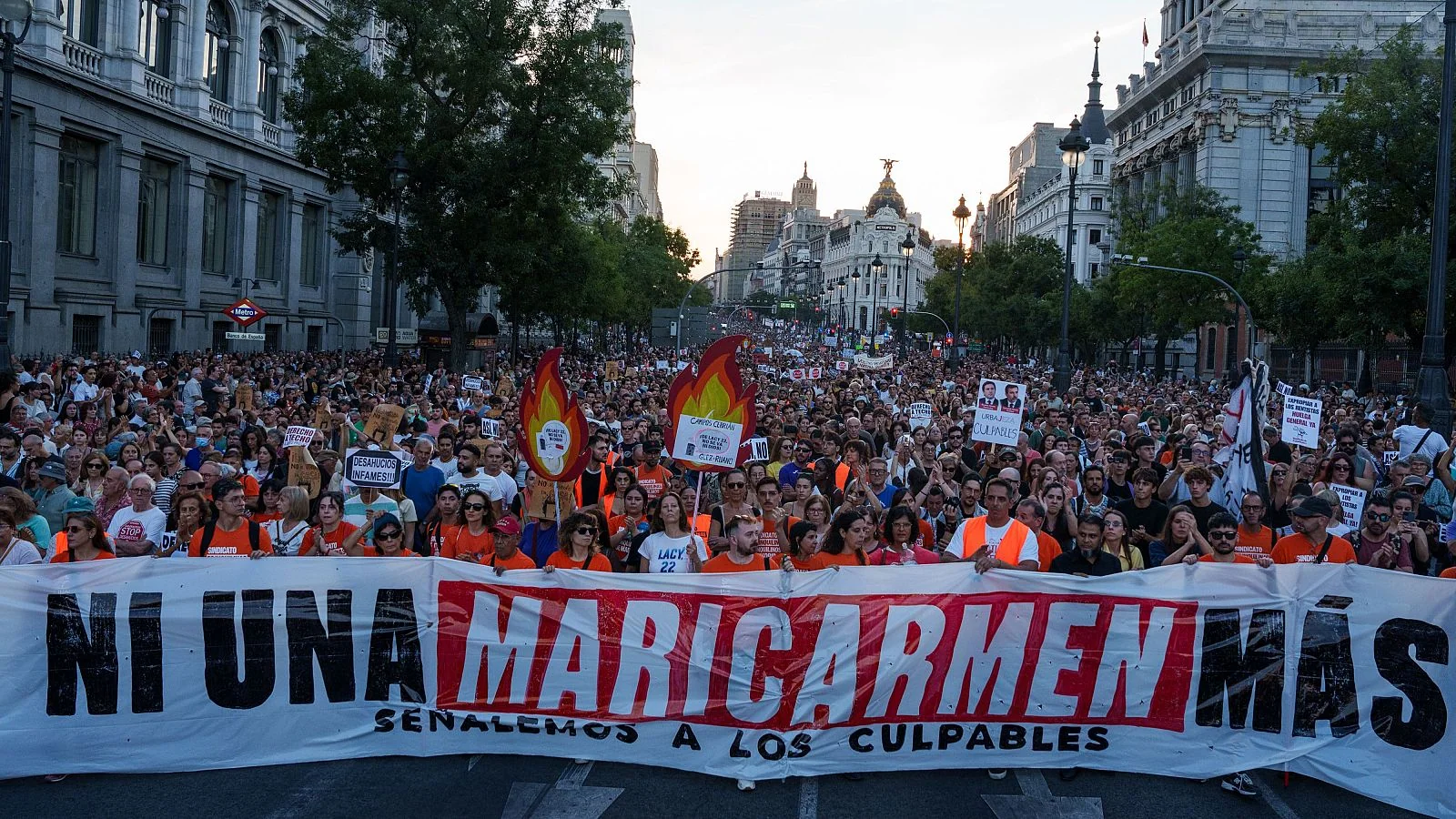
The electoral call began marked by the mobilisations against the eviction of Maricarmen and the claims about housing. During that week, an encampment began in Sol, mobilisations throughout Spain, decree-laws were taken to Congress for their validation, there was a great public debate about it and they ended up being rejected. This provoked the early call of elections for 29N, with a campaign that seemed it was going to be marked by housing as a fundamental element of mobilisation of the left. All this was initiated by the eviction of Maricarmen Abascal from her home on 23 September.
On 28 September, the real estate company reached an agreement for Maricarmen to return to her house. The Council of Ministers approved two royal decree-laws on 29 September, which were taken to Congress on 2 October, while mobilisations took place throughout Spain, and were rejected that same day. On 5 October, Pedro Sánchez announced the early election under the pretext of obtaining more support with which to push his social agenda and face this situation. On 7 October, Maricarmen Abascal died. All this in barely two weeks.
During the following weeks, an electoral pre-campaign began marked by the housing issue, which had just completely overshadowed the debate on immigration generated after the Ceuta crisis of July. Demonstrations, encampments, proposals, permeated the Spanish public debate, and even a general strike, the first in years, on the eve of the official start of the electoral campaign.
While all this was happening, the murmur of the negotiations to the left of the PSOE to run in the general elections under a single list was roaring in the background. The discrepancies discussed in public, the bilateral agreement of Podemos with ERC, the constant rows and the lack of final agreement gave rise to a somewhat desolate final photo of the left, without a joint agreement for Congress but with one in the Senate with the PSOE. It is said that all publicity is good, although I very much doubt that the left prefers the first rather than the second.
In this context where the PP had started its lively “Por fin” campaign and the PSOE trusted in the power of love and the strength of the people to turn the polls around, on 28 October the Urda railway accident took place. Barely 9 months since the previous Adamuz accident (of different causes although of similar public sensations generated), a new week of informative current affairs awaited us full of railway experts, of many and diverse sources explaining the same thing and different things to us, of manipulations and of the absorption of the pre-campaign by the railway sector.
After a week of conjectures, explanations, accountability and the posing of solutions, the Minister of Transport, Óscar Puente, one of the greatest political and electoral assets of the PSOE, announced by surprise on 3 November in an appearance before the permanent deputation his resignation as minister and his intention not to run on the 29N lists. On 10 November a funeral took place in Toledo Cathedral for the 69 deceased in the accident.
And with this and with the resignation as a fuse of the minister and his replacement by the vice-president Carlos Cuerpo, the electoral pre-campaign closed the railway chapter. Although it continued to accumulate prominence in the public debate in the sense of demanding concrete solutions, it is a paradigmatic example of how the times of political current affairs move. A question apparently as relevant as a railway accident, the second in a few months, with such consequences and that left society in shock has barely had space in the discourse; it would seem that it has lost almost all its prominence. It is true that it is mentioned, it is true that it forms a new block of protests, but it would seem that it has simply been added as one more element to the long list of items that accumulate in this our electoral campaign.
Current affairs and current political society have evolved towards a state of things in which events go from national novelty and collective hyperfixation to relative ostracism, to the loss of natural relevance and to a gradual but accelerated forgetfulness. Everything is succeeded and replaced by another event in a matter of days, even though the consequences of the previous ones continue to exist. That is something that has happened with Urda, much more with Adamuz, as far as the public debate is concerned, and with so many other elements.
In the public debate, Maricarmen replaced Ceuta, Urda replaced Maricarmen, and the controversies of Jordi Wild and David Broncano replaced Urda. Suddenly, the debate shifted to the reactivation of the electoral campaign and the role of the media. We moved on to discussing whether Vox’s demands to attend La Revuelta were legitimate, about the role (or the lack of role) of the interviewer in that programme and about Vox’s lack of word in cancelling its already agreed interview with Jordi Wild.
The prominence of traditional media began to be questioned in the face of new forms of online communication, the strength of the people took prominence again, the national journalism pretended to claim itself above the fashions of the youtubers, despite the infinite superiority of The Wild Project (despite its recognised errors) over traditional formats, a new television put the seventh gear on the audiences, the appearance of the candidates in media of diverse nature increased, the networks showed the enormous variety of forms of communication they could offer and mobilisation began to be glimpsed little by little.
Among all these mentioned elements, we also lived the Lulaist comeback of October thanks to its army on the networks, which quickly enlisted afterwards in the Sanchist army in a great Brazilian-Spanish alliance at the hand of André Janones. A transatlantic alliance exemplified in the meeting of Lula and Sánchez, with a rally cancelled due to aphonia and with an unprecedented increase in electoral activity on the networks by a socialist party whose social base, habitually, is associated with advanced ages and distant from these new formats.
A week later, the Israeli elections that seem to be on the way to unseating Netanyahu seemed not to have too much impact despite having been a hot topic during the legislature. A couple of weeks later, a blue tsunami swept the entire United States of America, waiting to see if its echoes would resonate in the same way in Spain, as an example that one can fight against the extreme right and against the unwritten future that the polls draw. The internationalisation of an electoral campaign has never been something common in the Spanish case, but it seems that a sort of broad front against the international ultra-right is running through various countries of the world, and we will have to see if they finally have real effects on the voters.
It is curious that a campaign that, apparently, had started so austerely, with the absence of the main leaders in certain media (Sánchez on El Hormiguero, Feijóo on La 1, Abascal on practically all and Colau without leaving the metropolitan areas) has evolved into a hyperactivity of such characteristics. We have Spotify lists, videos with AI, strategies on how social networks work, covers of Lecturas, podcasts, meetings with youtubers, multitudinous rallies, analysis of El Manual, WhatsApp channels.
The current affairs of the campaign advances at such a pace that each day something different and new happens compared to the previous one, and as I write these lines, despite following it with interest, I am incapable of recounting everything that is happening. Because each thing that happens is covered almost immediately by a new one practically the next day, so it is complicated to keep up with everything, even for someone who follows it with genuine attention and interest.
Surely I am leaving out many of the news items of this campaign that were so for a day, although in the revision I go making of these lines I include from time to time new ones that happen or that I remember. And in the face of this new reality it would be worth carrying out two analyses about the effect that the rushed nature of current affairs has on the (still) central point of the question: the electoral date in sight. I will simply point out these questions and not develop them here because I do not see myself with the capacity to do so.
The first is about whether we are heading towards a much more liquid society, a generation that has sometimes been called the TikTok generation, where news has relevance for a single day and shortly afterwards is quickly replaced by others. That is, is the attention span really reducing in a chronic and irremediable way? Do our political societies tend inexorably towards a situation in which temporary hyperfixation on the news of the moment prevails before quickly moving on to something else?
In this electoral campaign it seems that it is being so, and one sometimes does not know how we pass so quickly from one thing to another without barely having time to digest the previous one. Are the political times so accelerated of today what are marking that our current affairs become fleeting, or is the change of the times what is forcing our politics to adapt to ephemeral phenomena, instantaneous impacts and put-on and take-off news? I do not have the answer to these questions, but for the moment we will have to adapt to a reality that has become accustomed to astonishing us day by day with great news of unimaginable scope of which we easily forget.
The second question has to do with the long-term effect of these instantaneous news items. In a society that demands that we issue an opinion regarding everything instantly, even though that opinion is only going to last a few days, do these opinions have consequences in the future of our societies? Will the average Spanish voter, on 29N, remember all this accumulation of events that have been occurring and cast his vote according to that mixture, elaborate his own mixture and rescue in his memory only those that impact him most emotionally, or choose according to what affects him personally?
I am in favour of the idea that the average voter tends to a middle point between the last two options. Because if we assume the reality of the acceleration of political times, the least we can expect is that this whirlwind of information, in the era with the greatest access to information in the history of humanity, has some real consequence. I am very inclined to the idea that actions are much more effective and preferable if they have implications on the reality we live, so I would like to think that the novelty and the current affairs of the constant news, at least, will serve us to obtain this effect.
Be that as it may, independently of these considerations, it cannot be denied that that of 29N is one of the most entertaining electoral campaigns that are remembered. If something good the oversaturation of issues in campaign must have, it is that, with the enormous variety there is, surely anyone can choose one with which to feel identified and approach a little more this beautiful and cruel art that is politics. Surely, among everything that the current current affairs offers us day by day, anyone can find at least one single topic that falls within their sphere of interests. Whether this happens with greater frequency and entails positive or negative consequences will remain for their own considerations. You (or time itself) will tell us.
All elections are historic
 All elections are historic, and not only because, undoubtedly, they form part of history and we are constantly sold that idea, but because, in addition, they effectively are. All the actors involved in an electoral process can always find some motive to assert that the next electoral date is historic and requires our attention. And not only can they find their own motive to sustain that idea, but they can elaborate a whole ideology to convince us of it.
In a worldwide electoral cycle that, depending on where one looks, seems to be rejecting the postulates of the extreme right after a decade (although in other places it seems that that wave is just beginning to arrive), it would seem reasonable to speak of historic elections in any country if we frame each individual electoral process in that more global context. It is not yet clear what the level of relevance that international politics has in the different electoral processes that are taking place is, but it would not be reasonable to ignore global trends. That does not mean that everything is heading towards the same place, but that patterns and a certain drag effect of these trends can be seen. After all, in such a connected world no matter can escape this connection.
In the Spanish case, the analogy is clear. Vox is clearly framed in a global entente of the extreme right that has its greatest prominence in countries such as the United States, Israel or Italy, among others. At the national level, in November 2019 it reached a relative maximum that remains to be seen if it is surpassed 7 years later, but the formation seems to approach 29N with a growing electoral trend and reinforced by relatively good results in the last autonomous elections.
Likewise, the traditional Spanish right of the PP has transitioned from a frontal opposition to these postulates, to depending entirely on them to reach practically any type of quota of power, possibly as a result of an erroneous political strategy during the last years. Given that the different traditional rights of the world have followed different paths in this regard, the PP cannot be framed in such a clear global trend in this sense: for some it questions the sanitary cordon that other rights have implemented and defended and for others it is only adapting to the reality of society without pretending to change it, but to take advantage of it.
In the panorama of the left, the PSOE and the political space of what was Podemos starred in a hard battle in 2015 and 2016, which ended with a Pyrrhic resistance on the part of the traditional social democracy of the PSOE, avoiding the sorpasso of the new politics, the dismissal of Sánchez and the refounding of Spanish social democracy. In this sense, Sánchez was able to neutralise his left by means of the technique of the bear hug.
After a rather aggressive campaign in 2019, Sánchez understood that it was much easier to control his left by introducing them into the government, with more or less modest portfolios, and guiding all their political action than by denying their postulates, renouncing their electoral base (which in the past had been his) and insisting on an approach to the right that no one asked for.
The result of all this process is that we are approaching a situation of practically total absorption by the PSOE of the political space to its left, where the latter cannot aspire to much more than to act as almost unconditional supports of Spanish social democracy, within the conformation of a political block in Spain that is no longer only progressive, but plurinational.
In this sense, it is reasonable to speak of historic elections. Historic insofar as the doubt of whether this trend materialises and Spain becomes one of the countries of the world in which its extreme right has responsibilities of power, or whether, on the contrary, the plurinational block manages to resist the onslaught and revalidate the government. No one can deny that, these being the only two possible options (leaving aside the possibility of electoral repetition, which is so common in the Spanish system), these elections are posed, effectively, as historic. As historic are also their protagonists, or at least their main one.
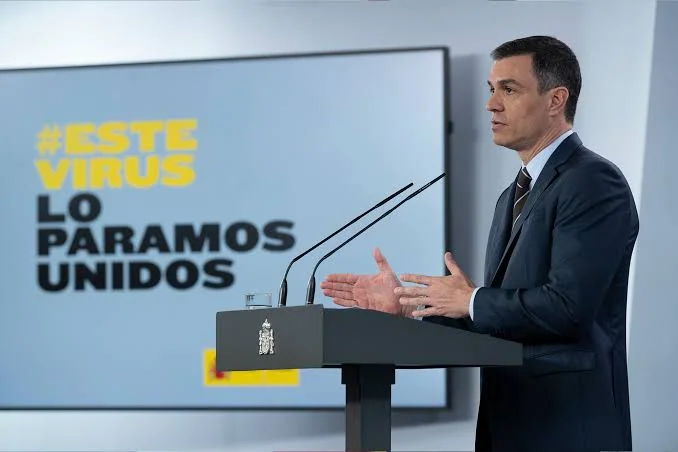
Pedro Sánchez is probably THE Spanish politician of the 21st century. His political career since 2014 is the very definition of history. From being a reference of the socio-liberal wing of the PSOE in his first primaries of 2014, to being expelled for intending a plurinational agreement. From being a pariah for the great heavyweights of the party, to being raised to the general secretary by his own bases. From the most absolute modesty, to winning the first motion of censure in democracy. Since then, since June 2018, he chains more than 8 years of government, a governmental stability uncommon in the Western world, although not always is stability synonymous with tranquillity.
During these eight years, Sánchez has had to face political situations and crises of all kinds: the loss of more than thirty uninterrupted years of socialist government in Andalusia; demonstrations of the right-wing tripartite because of a rapporteur; the holding of two general elections, some autonomous, some municipal and some European in 2019; the first coalition government in democratic history; the COVID-19 pandemic; the war in Ukraine; the eruption of the La Palma volcano; the Filomena storm; the exit from Afghanistan; the loss of almost all territorial power in 2023; the unexpected early election that same year; the amnesty and the pardons of the procés; the DANA of Valencia; the blackout; the war in Iran; the genocide in Gaza; the crisis in Ceuta; the Venezuelan crisis; two railway accidents; the judicial offensive; the fires. It would seem that we are back to the previous point about the immediacy of current affairs, but no, we are talking about Pedro Sánchez’s mandate of more than eight years.
It would seem that what is historic here is Sánchez’s own mandate, and not the fact that after all this Sánchez presents himself to his sixth consecutive general elections as candidate to revalidate the government. Although the polls do not draw a too promising scenario with respect to this objective (although, to be fair, neither did they in 2023), it is no less true that, if he manages to extend his mandate, we would be talking about historic elections. In this sense, he is not mistaken who already qualifies them as such. Both the option that Pedro Sánchez continues in La Moncloa for another four years and the option that the right and extreme right opposition takes power after more than eight years of unprecedented events make those who pose this electoral date as a historic event, in either of the two senses, right.
The right appeals to a historic mobilisation of its electorate, to a popular expression of weariness against the current executive that must be evicted immediately. A base that, in a certain way, has already been mobilised throughout what we have of the legislature. On the other hand, Sánchez appeals to a historic progressive mobilisation to stop the extreme right, to defend the last bastion of European social democracy and to avoid social regression. He appeals, without needing to do so explicitly, to his much-acclaimed capacity for resistance, that of a man who during all these years has known how to reinvent himself, adapt to the changes of the times and take risks when he had to. And the truth is that both blocks are right when speaking of historic circumstances, but the curious thing is that both suppositions speak well of Sánchez.
An electoral result that allowed Sánchez to continue in La Moncloa would be historic, not only because of the way in which these elections have been posed, as a plebiscite on extreme right yes or no, and for defying the entire poll panorama, but because, in the face of the circumstances recounted previously regarding the last eight years of government, its prolongation would only praise Sánchez’s political virtues: his capacity for resistance (both physical and political) in the face of adversity and not bending or abandoning, of adapting to permanently changing social situations, of facing the challenges of the world, of adapting his register, tone and rhythms to those of each moment, of understanding society and of knowing at each moment what it demands. In short, we would be talking about one of the best politicians in Europe.
On the contrary, an electoral result that took Sánchez out of La Moncloa would be historic, not so much for the fact of ending a mandate that has been full of difficulties and challenges, but because it would give way to the entry of the extreme right into the government of one of the great countries of the European Union. Ending such an audacious political strategist as Sánchez is a coveted hunting trophy for a large part of the media, political, economic and judicial power of Spain (we will have to see if this translates into a sort of underdog effect), and the fact that it came accompanied by the complete mimetisation of the traditional conservative right with the reactionary European extreme right would turn this result into something historic. It would mean, in a certain way, legitimising the anything-goes strategy, consisting of crossing certain limits in a blatant way, as has been done during these last years, with lies that only confuse people (at least the well-intentioned) and with orchestrated offensives at all levels.
Really, however hackneyed it always sounds when it is said, those who qualify these elections as something historic are not mistaken. Not only do the candidates involved do well in reminding it (after all, it is one of the cards they have at their disposal to mobilise their own), but the analysts who are in charge of explaining to the rest of society how society works should be able to recount how this qualification of historic translates into reality. I suppose that to enjoy a detailed and faithful analysis of these consequences we will have to wait until the morning of 30N. In the meantime, we will have to content ourselves with the numerology of the polls, the data on reality and the phrases and conjectures that really tell us nothing but that abound in the final days of the campaign.
Brief note on demoscopy and its derivatives
Statistics is one of the great branches of mathematics, one of those that manages to relate the abstract and ethereal objects of the world of mathematics with the reality of the society it intends to describe. Its application in demoscopy is one of the great sociological manifestations that occurs in every electoral campaign. It is not my objective here to describe or analyse that discipline, its functioning and its errors. But I would like to point out that demoscopy has become, in the last electoral campaigns around the world, one more element of manipulation or orientation of the vote.
Under the premise of a supposed scientific basis that supports some data (which are often not given openly), the self-proclaimed demoscopic experts prophesy and give lessons to society about how society works from the loudspeakers that are provided to them. Sometimes, it is almost obscene to see how the experts in demoscopy, like some political analysts, explain society practically ignoring society. Talking about comeback (an absurd concept, since it takes for granted a situation of prior inferiority that has not occurred, since no one has yet deposited their vote in a ballot box), of stealing votes, of loyalty, of transfers, means exposing concepts that perhaps on paper have their technical definition and their academic utility, but that transferred to society give the sensation of pretending to impose themselves on the reality of the people.
It is worth remembering, as José Félix Tezanos well says, that polls are not an element of divination, that they do not pretend to predict the future, but to give a (very limited) description of the present. If they were, it would not be explained that they have failed so much and in such an evident way so many times in recent years: with Trump, with Brexit, with Lula, with 23J. Nor would the recent tendency of daily trackings be explained, which seem more a way of little by little correcting some crazy initial estimates than an effort to make a real tracking of society. The only possible option, discarding a massive and systematic numerical and human error, is that demoscopic companies shelter in a supposed scientific basis to induce, motivate or discourage the vote.
The only thing that the state of demoscocracy in which we find ourselves immersed makes clear is that it would be advisable to improve education in science, mathematics and, specifically, in statistics. It is urgent that we flee from the clichés of the rules of three, of not understanding the ranges, of not knowing how to calculate errors, of pretending that the polls are reality and not only a sample of reality. It is urgent that we be aware of the limitations we have with respect to the study of our own reality, and that we be sufficiently capable of distinguishing when we are being tried to be deceived and in what way.
Statistics is an interesting, well-worked mathematical discipline, which on occasions allows us to obtain conclusions about our physical reality that would not otherwise be possible or accessible. Integrating it correctly into the study of societies is fundamental for it to be a true instrument at the service of knowledge and not a tool of political manipulation, which is what it seems to have become in our modern political societies. Fleeing from the gurus and the self-proclaimed experts is also necessary to avoid giving an importance that it does not have to something that lacks relevance. Only in this way will we be able to draw with clarity and knowledge what we want our future to be.
What to expect from this 29N
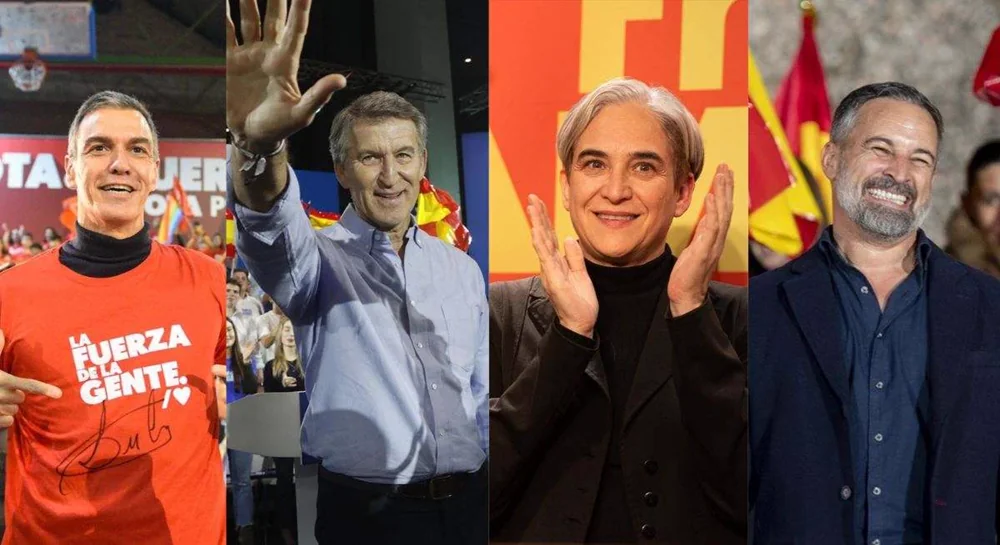 Whatever the result of this 29N may be, it will be interesting to analyse how the three electoral elements we have related here end up materialising and what future path they have. It would be preferable, and even recommendable, that it serve as an example to reflect on the model towards which electoral campaigns are evolving in these modern times, on the health, the rhythm and the utility of the public debate, and to answer great questions about society. Is it acceptable to plunge society into a state of permanent electoral campaign? Is it assumable that current affairs renews itself practically daily, with new news constantly that quickly overlap the previous ones and divert, often, the focus from what is relevant? Will the Spanish voter be capable of issuing a value judgement through his vote distinguishing the urgent from the important, seeking the achievement of real objectives? Is everything historic? It will remain to be seen, in short, whether the avalanche of stimuli, the temporary hyperfixation and the whirlwind of historic events help societies to decide the course of their countries or whether, on the contrary, they entertain us with sterile debates and lead us to an emotional decision-making.
On 30N we will know the answer to some of these questions, and possibly new debates will open in a new political stage of Spain (every election always opens a new one). We will have to analyse the new reality according to whether the political leadership and the resilience capacity of Pedro Sánchez allows the continuity of his plurinational block in the government, thus turning these elections into one more of the news items of current affairs that succeed one another and into one more item on the list of adversities faced by the president, or whether, on the contrary, the law of political gravity does its thing and the oscillatory movement of the pendulum of politics takes us to the opposite side. And from this result, the only tangible one, is that we will have to begin to pose how we want to build the future societies.
Whatever happens, I believe we should not forget that the public debate should not be absorbed by empty and futile arguments, that we should value a little more the permanence (so denigrated by Heraclitus) of the important things, flee from the immediacy of recent times and leave behind the frenzy of the last-hourism to leave room for the paused and deep reflection on the matters that determine our way of life. After all, societies should be built around the tangible consequences of political action, which runs the risk of being surpassed by the paroxysms of the hurried political times we live in. And although, at the end of the day, everything will end up being historic, we must be able to decide what type of history we want.
Share
For Instagram: copy the link and paste it in your story or DM.
Continue with

Politics
From “Pick Another Senator” to “Nove Dedos”: Slips of the tongue that represent a whole
A slip of the tongue does not define an electoral defeat, but it ends up offering a glimpse into what was truly behind a surprising result.
Felipe Galli
Opinion · Politics
From militant activism to the test of internal democracy: My journey at the heart of the CRM Leadership succession
An inside look at the leadership renewal of Cameroon's main opposition party.
Marie Flore Mboussi
Opinion · Politics
What if Bregman wins?: "A real (but quick) exit on the left"
The Argentine left sees a window of opportunity. What would happen if you took it?
Felipe Galli

Comments
No comments yet. Open the conversation.
Sign in to comment. Sign in