
International politics
A SOCIETY TURNED OFF BY THE LIGHT
https://conciencia-democratica.org/articulos/una-sociedad-apagada-por-la-luz?lang=enBy Pedro Joaquin Villagra DelgadoSeptember 6, 202616 min read
In-depth reading
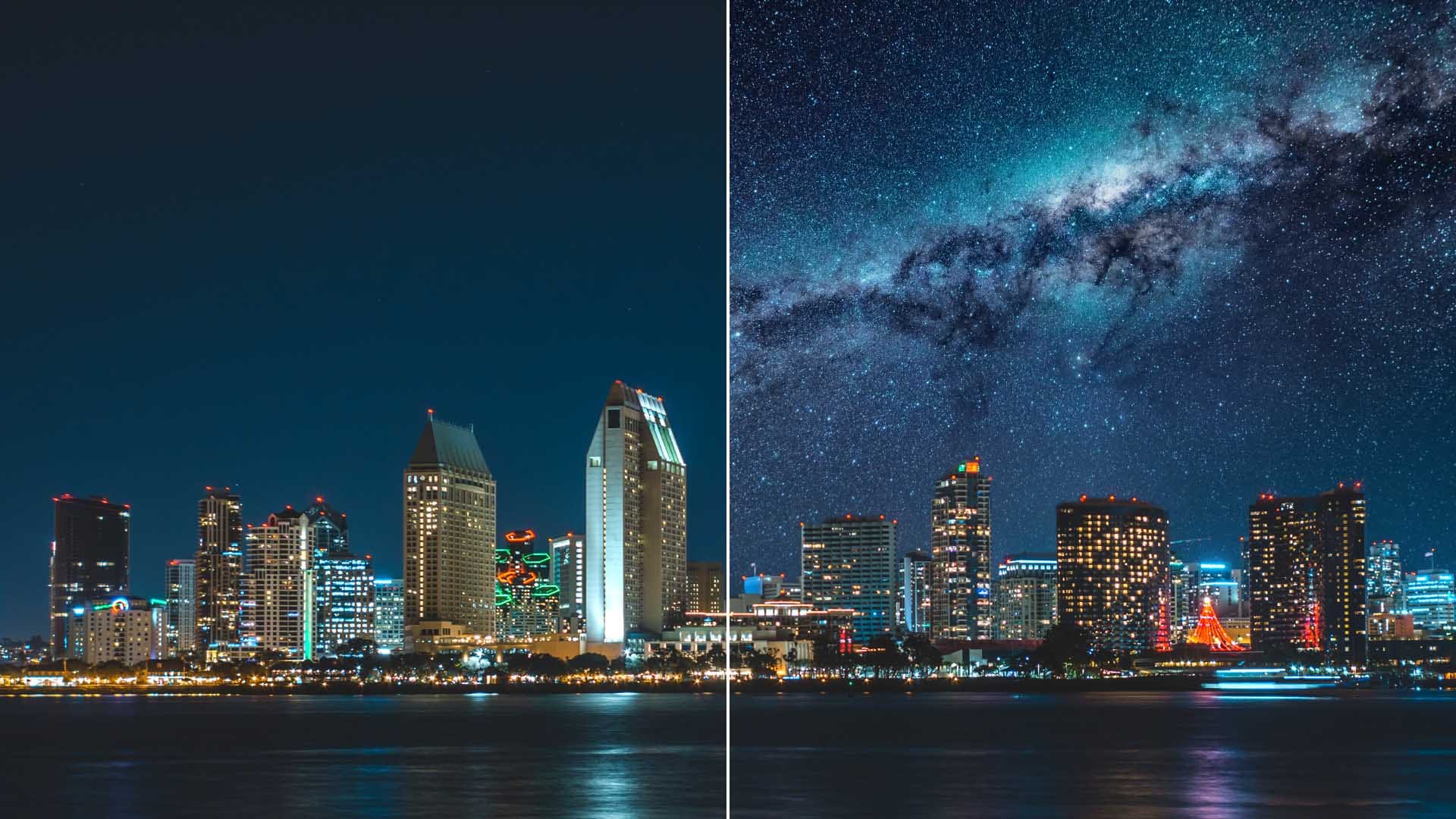
If any of you who are reading me at this moment have perhaps been lucky enough to at least retire on a country day well away from the urbanization, then surely it was your turn, assuming that that day was clear and night had fallen, to witness a sky illuminated by small points that together could resemble an entire city seen from above on a night from space.
The truth is that we know that those are stars that in our visual field connect points that allowed ancient civilizations to agree that those formed figures that represented beings and protagonists of myths and legends. Today we understand, however, that many of these stars that appear to be parallel to each other may in fact be thousands of light years away from each other.
But regardless of whether one knows that fact or not, or starts to think about it or the possibility that in that dark and distant forest called the universe there is some hidden civilization, the reality is that contemplating a sky completely undisturbed by light surrounded by night sounds is an extremely magical experience.
But everything naturally pure is at some point overtaken by civilization and the night sky is unfortunately no exception. The truth is that the night as people contemplated it two hundred years ago is disappearing, and not because the stars are doing so, but because of a physical phenomenon called light that is appearing at the wrong time, when there should be darkness, obscuring the light of the stars and thus making it difficult to see.
Of course, don't get me wrong, light is a completely common phenomenon in nature and essential for life to develop on earth, since thanks to it plants can generate their own source of energy, allowing the support of an entire food web that involves other species, both herbivores and carnivores.
Light also determines a lot of physiological, metabolic and behavioral functions in almost all types of organisms, from allowing the development of vision, the synthesis of vitamin D and neurotransmitters in an important family of organisms, circadian rhythms and even the establishment of mating patterns, as in the case of fireflies that guide their potential mates through light in the dark.
But as much as light is an essential phenomenon for life, human love for it has gotten a little out of hand, not to say enough out of hand. Since the beginning of humanity, darkness has been synonymous with mystery, the unknown and possible dangers; Our most primitive ancestors imagined that, wrapped in that dark cloak of night, some predator or other danger could hide that we could not be completely sure of. It is not for nothing that the color black gives us that feeling of mystery and in many cases fear; So much so that the hidden and dark is a resource that is used repeatedly to generate fear in horror films.
Therefore, since humans managed to manipulate fire, it became a refuge from the unknown or what could not be observed and, no less important, it provided heat and allowed us to cook food, improving our diet at that time.
But as technology advanced, the ability to generate light became increasingly efficient and accessible, the use of and dependence on artificial light has not stopped escalating. With the arrival of the industrial revolution this process accelerated abysmally, especially with the arrival of the incandescent light bulb created by Thomas Edison in 1879 that was used to illuminate the night streets of New York. Since then, lighting not only in homes but in all public spaces has spread exponentially, becoming a practically mandatory policy in any urbanized space.
This process provided comfort and a feeling of security in urban populations, and once the human being enters a state of comfort, it is extremely difficult to return him to his previous state. In fact, any city person prefers to travel in the best illuminated area possible since it allows them to orient themselves better, in addition to providing greater security.
In fact, according to a meta-analysis of several studies carried out in cities in the United States and the United Kingdom, urban lighting contributes to crime reduction, being the most visible evidence in cities in the United Kingdom. A logical explanation for this is that light makes it easier to expose people's activity and the other is that it allows a place to be more crowded, thus reducing the attempt at a criminal act. However, the results have not been similar in all cities and many of them did not even show significant reductions, especially cities in the United States (Welsh & Farrington, 2008).
But although artificial lighting offers benefits to the population, or at least a feeling of greater comfort, its expansion has also accompanied industrialization and the growth of cities. The phenomenon has reached such a magnitude that, in many situations, we make unnecessary use of light.
I understand that it may seem difficult to interpret the term "unnecessary use of artificial light" since many of us are already accustomed to its excess, from keeping the light on in a room or hallway throughout the night to placing LED artificial light in any circuit or minimally busy space, whether in a rural space or not, but today it would appear that people cannot tolerate even a minimum space without light at night, including in rural spaces or close to wild spaces where it is understood that it is Normally there is no light.
So that we can measure this disproportionality of artificial light, satellite images prior to the year 2000 with the aim of quantifying the brightness of the Earth's sky showed that several regions of the planet showed a brightness that exceeded up to twenty-seven times the natural night luminosity, while 99% of the population of the United States, the European Union and two thirds of the world's population lived in skies with brightness above the light pollution threshold (which represents more than 10% of the original night lighting).
Along these same lines, at that time 80% of the population of the United States lived in night skies with a light intensity comparable to nights with a full moon, but none of this can be contrasted with the situation of mega cities where nighttime brightness values greater than twenty-seven times the natural night light could be directly reached (Cinzano et al., 2001).
Now, with all this we understood that the use we are giving to artificial light is somewhat excessive, but how does it impact our daily lives? They might assume that we would be disturbing animals and plants, but that does not harm us directly; Although the reality is that this has a potentially greater impact on us than one might assume in regards to our health.
Excess artificial light is essentially an environmental pollutant, it is not one of those tangible ones like toxins or smog itself, in fact, as we had seen, it is usually very welcome in our society, but in effect this excess is light pollution that affects our physiology.
Surely you have heard of the hormone melatonin, very well known in this context of the epidemic of lack of sleep. Melatonin is one of the main hormonal signals involved in the regulation of circadian rhythms and the sleep-wake cycle. In short, it is the hormone that prepares us for sleep at the right time of day, which is night. This includes changes in a lot of functions, such as heart rate, blood pressure, changes in sugar metabolism and energy generation, brain activity, among others.
Melatonin production by the pineal gland is regulated by our central biological clock, located in a brain region called the suprachiasmatic nucleus (SCN). This clock receives information about the amount of ambient light through the retina. During the night, the decrease in this light signal favors the production of melatonin, while exposure to light during nighttime hours can delay or reduce it.
How could we deduce, that natural process that marked our sleep schedule, which was the night, is becoming increasingly diffuse due to light pollution, which alters our sleep-wake cycle.
Added to this problem is a technological change that has occurred in recent decades: the advancement of lighting using light-emitting diodes, commonly known as LEDs. Which produces light without the need for incandescent filaments and fluorescent gases, which allows light to be generated without producing excessive heat, resulting in greater durability. On the other hand, this technology allows for greater luminescence to be produced with less electricity consumption, which means greater illumination while consuming less energy.
But although it is extremely practical and even “environmentally friendly” in what is strictly related to energy production and reducing the carbon footprint, it turns out that in other aspects it can be extremely toxic for many organisms, including humans.
The illumination of certain types mostly extended within the LED light emits a significant proportion of illumination within the blue range of the visible spectrum, and if that were not enough, it is visibly constituted by waves of different frequencies and energy levels that we perceive as different colors; Thus, blue is one of the most energetic within this same spectrum. Given this, we warn that there is something even more important for which we are challenged since blue light can delay the natural release of melatonin, making its effects on the sleep cycle more pronounced.
Let us therefore imagine that not only LED light is spreading in urban lighting, but that it is a technology that is implemented in devices such as smart cell phones and computers, and melatonin by participating in several metabolic processes at the same time, its disruption can thus have several consequences on general health.
A meta-analysis study examined the results of several studies at once, finding several associations between various pathologies and exposure to moderate to high levels of LED light. Among them, cardiovascular diseases predominated, such as a greater tendency to develop hypertension represented as higher systolic pressure in populations in areas with greater luminosity, which were associated with greater urbanization in both China and India.
Consequently, associations have been found with more serious diseases within this category, such as cerebrovascular accidents (CVA) and coronary heart disease in regions with greater exposure to blue light.
Added to this, exposure to higher doses of blue LED light were also associated with metabolic diseases such as diabetes, thus showing higher levels of blood glucose and insulin resistance, and if that were not enough, the present meta-analysis also found a strong correlation between the exposure of this type of lighting in German children with autoimmune processes in the “islets” of the pancreas which are necessary for the production of insulin, which translates into type I diabetes in infants.
Obesity was also found to have a strong correlation with exposure to areas with higher levels of artificial light with LEDs, a possible explanation being the fact that melatonin also participates in the processes of satiety and hunger and said alteration could lead to eating problems and also contribute to other diseases already mentioned (Jiménez et al., 2025).
In addition to the drawbacks already mentioned, we can find other adverse effects on mental health and the development of neuropsychiatric diseases, especially depressive disorders and bipolarity, according to several of the works analyzed, given that LED artificial light is correlated with greater manic episodes in people with bipolarity (Jiménez et al., 2025).
Although analyzes of this type may have their limitations since they largely base their methodology on finding associations in very generalized populations that are found in areas with different exposure to artificial light according to satellite images and as a consequence they may be ignoring other variables that accompany the areas of greatest illumination that tend to be the most urbanized, such as other pollutants or the lifestyle of the people who live there. However, it is still an observation that gives us a perspective of how artificial light affects us directly or indirectly.
Returning then to neuropsychiatric disorders, this is a worrying aspect since there is even knowledge in this regard that would indicate that the deregulation of melatonin caused by artificial light can have a very harmful effect on the neurological level.
Beyond the links that have been found for disorders such as depression and bipolarity, some epidemiological studies have also found an association between greater exposure to artificial light at night and the presence of autism spectrum disorders (ASD) and other neurodevelopmental conditions (Xie et al., 2022).
Although these conditions do not have a clear origin but are of multifactorial origin, that is, they comprise an enormous variety of both genetic and environmental factors that contribute to the modeling of the condition, it is precisely for this reason that light pollution could contribute greatly to the development of neurodevelopmental conditions, and its increase also accompanies the increase in the use of LED artificial light in recent decades, although the evidence is not sufficient to affirm any type of causality.
This being something that brings up several facts where it is pointed out that the low production of melatonin is related to inflammatory processes included in the central nervous system, and more importantly, it has been found that the hormone in question could have an important neurotrophic role, this suggests that it showed to have effects potentially similar to proteins that participate in the creation of new synapses, connections between neurons, and in synaptic remodeling, processes that are key to neuronal plasticity that guarantees learning. (Miranda-Riestra et al., 2022).
As we have pointed out, these latter processes are especially sensitive during childhood and LED-type artificial light could be having a much deeper impact than we could speculate at the level of neurodevelopment; To this we could add the lack of sleep, caused by several factors where we can also include the effect of LED lights to the cause, which reproduces imbalances in cholesterol levels in the brain which are necessary for the formation of myelin sheaths (Simayi et al., 2026), a substance that covers the axons of neurons, and allows increasing the speed with which an electrical impulse is transmitted between one end of the neuron and the other, to more global features it allows greater efficiency and speed of information.
Although this process can be affected at any age by lack of sleep, which is still worrying, infants are the ones who are in a more vulnerable situation as it strongly impacts their development, being especially worrying if we become aware that an entire entire generation could be harmed to a lesser or greater extent.
It would be alarming then that with the existing evidence regarding the harmful effects generated by excessive nocturnal exposure to artificial light, especially that of blue LED origin, and in view of which we are not only including its impact on the stability of the flora and fauna, which although it is essential in this case its significance and importance lies in the direct consequences on our species, especially our health and anthropological behavior. That said, it would be pertinent and urgent for this matter to be addressed by the corresponding government commissions as long as science, health and technology allow us to resolve it quickly.
However, this problem is already quite complex (since the solutions are somewhat difficult to apply). The growth of urban lighting is a phenomenon that comes hand in hand with urbanization and cannot be deprived of the luminaire itself. One of the first things that municipal or city governments seek to improve is public lighting, especially in those places where security turns out to be a social problem and this is where general complaints from neighbors arise.
Today, public lighting is being improved mainly by replacing warm incandescent light with LEDs (mostly blue), not only because it is more intense but also because it represents budgetary savings due to the low energy consumption that it means and is also part of an agenda aimed at combating climate change and contributing to the reduction of the carbon footprint.
Given this, it is not easy for States to choose not to illuminate public spaces with LED lights, not only because it is unpopular, but because it would go against the “improvement” in the quality of public space. No one is going to choose to return to incandescent lights because they are healthier, or probably yes, to date I have no news that anyone has proposed lighting with conventional warm light instead of LED (at least in Argentina).
A half-solution, although even today it is difficult to achieve, is to respect natural spaces more and have more sober building codes that imply, as far as possible, not building on any natural space, much less disturbing those spaces with LED lights, but contrary to this, the process simply advances, there is almost not a single busy place that does not "need" modern lighting.
It is difficult to see when and how public policies can be directed towards a scheme that visualizes this problem caused by light pollution more than community comfort. But the reality is that an increasingly suffering society sooner or later ends up paying its consequences in multiple aspects, including, paradoxically, the one that artificial light came to energize from its beginnings: the economic one.
What I can advise is that the next time you go somewhere totally away from the tentacles of urbanization, look at the sky and appreciate that extraordinary moment because there is no guarantee that it will continue to be visible to everyone in the future.
Literature:
Cinzano, P., Falchi, F., & Elvidge, C. D. (2001). The first World Atlas of the artificial night sky brightness. Monthly Notices of the Royal Astronomical Society, 328(3), 689–707. https://doi.org/10.1046/j.1365-8711.2001.04882.x
Jiménez, D., Neira Arenas, L., Hernández Rincón, E. H., García Céspedes, M. J., & Jaimes Peñuela, C. L. (2025). Luminous threats: The health impacts of artificial nighttime light on metabolic and mental health: A scoping review. Wellbeing, Space and Society, 8, 100260. https://doi.org/10.1016/j.wss.2025.100260
Miranda-Riestra, A., Estrada-Reyes, R., Torres-Sanchez, E. D., Carreño-García, S., Ortiz, G. G., & Benítez-King, G. (2022). Melatonin: A Neurotrophic Factor? Molecules, 27(22), 7742. https://doi.org/10.3390/molecules27227742
Simayi, R., Ficiarà, E., Faniyan, O., Cerdán Cerdá, A., Aboufares El Alaoui, A., Fiorini, R., Cutignano, A., Piscitelli, F., Maroto, A. S., Santos, A., Del Gallo, F., De Vivo, L., De Santis, S., & Bellesi, M. (2026). Sleep loss induces cholesterol-associated myelin dysfunction. Proceedings of the National Academy of Sciences, 123(4), e2523438123. https://doi.org/10.1073/pnas.2523438123
Welsh, B. C., & Farrington, D. P. (2008). Effects of Improved Street Lighting on Crime. Campbell Systematic Reviews: Better Evidence for a Better World, 4(1), csr.2008.13. https://doi.org/10.4073/csr.2008.13
Xie, Y., Jin, Z., Huang, H., Li, S., Dong, G., Liu, Y., Chen, G., & Guo, Y. (2022). Outdoor light at night and autism spectrum disorder in Shanghai, China: A matched case-control study. Science of The Total Environment, 811, 152340. https://doi.org/10.1016/j.scitotenv.2021.152340
Share
For Instagram: copy the link and paste it in your story or DM.
Continue with

International politics
«The Last Bullet for Democracy»: The Merz Government Faces State Elections
The CDU/CSU-SPD coalition under Chancellor Friedrich Merz, the most unpopular in recent history, confronts three decisive state elections in September 2026.
Lukas Effinger

International politics
The new Catalan oasis, or as the storm precedes calm
From sociological pujolismo to procés and its hangover: tour through the three great Catalan oasis of recent history and the new stage of institutional calm that opens in Catalonia after the lost decade.
Víctor-Xavier Bigorra Lorenzo

International politics
Goodbye Lenin or Hello Putin?
The 176 measures announced by Havana are the latest economic opening without political reform. The question is not whether Cuba will become capitalist, but whether it will mutate into an oligarchic authoritarianism like Russia or Belarus.
Ernesto Sardiñas
Comments
No comments yet. Open the conversation.
Sign in to comment. Sign in